
What Another Season of "It's Fine" Actually Costs
Skip this one more winter and here's what happens: the furnace runs longer to hold the same temperature, the room above or beside the garage stays chilly no matter what the thermostat says, and any pipes or ductwork routed through that space are one cold snap away from a real problem. None of that shows up as a single line item on the power bill — it shows up as a bill that's just higher than it should be, month after month, with no obvious cause. That's usually the moment one spouse says "it's just the garage, who cares" and the other says "it's attached to the house, genius." Both of you are partly right, which is the whole point of this.
Why an Attached Garage Isn't "Outside"
If the garage shares a wall, a ceiling, or a floor with living space, it's thermally connected to your house whether you treat it that way or not. Heat moves toward cold. So when the garage sits 15-20 degrees colder than the house because the door is leaking air, that temperature difference pulls warmth out of the adjacent rooms right through the shared wall or the door between the garage and the house. Your HVAC system then has to make up the difference, even though the thermostat is nowhere near the garage.
This is also why a bonus room over the garage is almost always the hardest room in the house to keep comfortable. It's got cold air underneath it leaking in from a poorly sealed door, and often less insulation than the rest of the house to begin with.
The Symptoms Worth Checking Tonight
- Daylight or a draft along the bottom of the closed door — the bottom seal has hardened, cracked, or pulled away from the track.
- Gaps between panel sections — common once a door is 10+ years old and the weatherstripping between sections has compressed or split.
- Visible light or air movement around the side and top jambs — the perimeter seal doesn't matter less than the bottom one, it's just easier to forget.
- A noticeably colder garage than it used to be — often a sign the seals swelled during a humid summer and never fully recovered, leaving small permanent gaps.
- Rust spots or swelling at the bottom panel — a sign moisture has been getting in and sitting, which is common in this part of Alabama given the humidity and the afternoon downpours that find their way under an aging seal.
What's Actually Worth Fixing vs. What's Cosmetic
Not every gap matters equally. A hairline gap at a side jamb on a mild day is a minor loss. A compressed, cracked bottom seal on a door that gets wind-driven rain is a real and ongoing heat leak, and it's usually the single biggest contributor to that cold-garage effect. If the door itself is an older, uninsulated steel or wood panel, even a perfect seal won't change the fact that the door is a big single-pane-equivalent surface losing heat all day. In that case, the real fix isn't another seal — it's an insulated replacement door, which is a bigger decision but the one that actually changes the number on the bill.
When to Call Boaz Garage Door
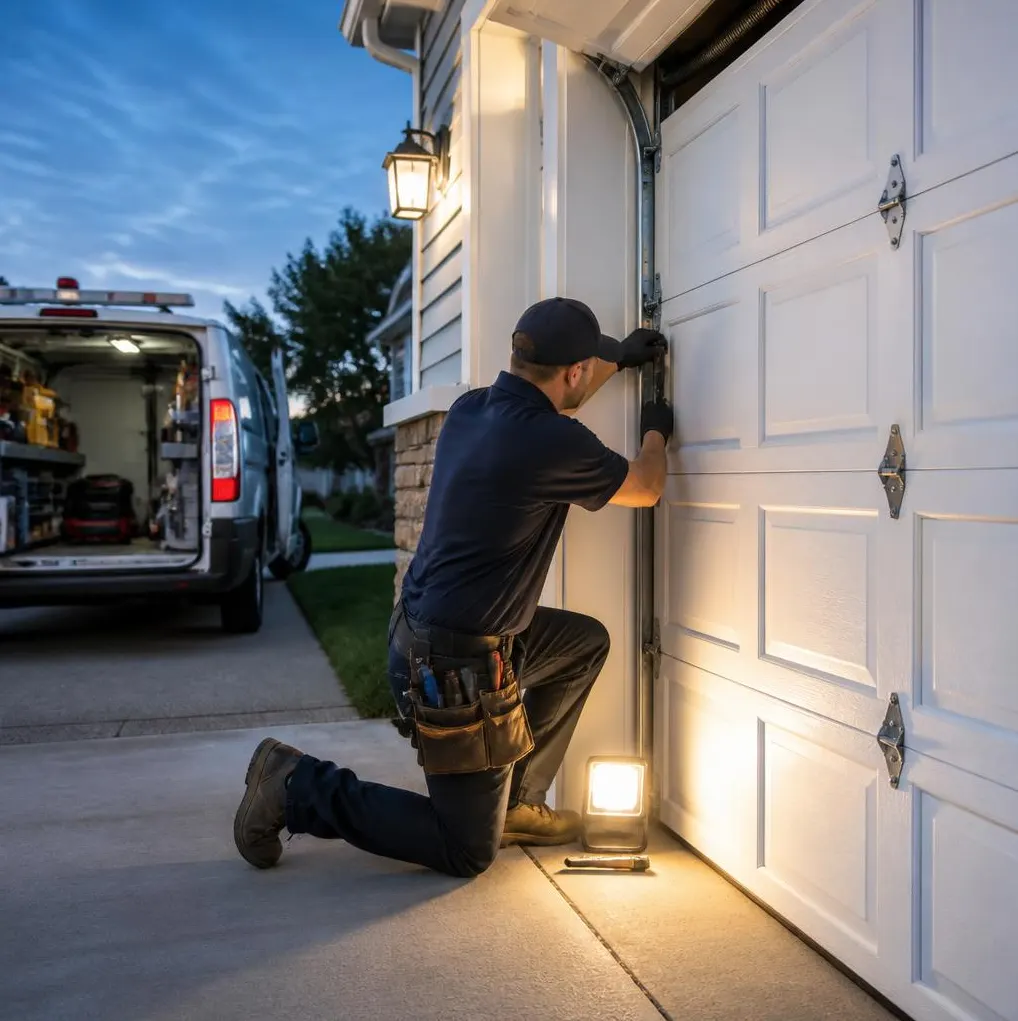
If you've checked the seals and panels and the garage still runs noticeably colder than it should, or you're not sure whether you're looking at a worn seal versus a door that's simply not built to hold heat, that's a good time to call. A Garage Door Maintenance & Tune-Up gets everything inspected — seals, panel alignment, hardware — and tells you honestly whether sealing is enough or whether the door itself is the problem. If it's the latter, we'll walk you through Garage Door Installation options with insulation ratings that make sense for Marshall County's mix of summer humidity and winter cold snaps, not a generic big-box recommendation.
If the attic room is cold, the power bill crept up, and you and your spouse have officially agreed to disagree — let us settle it. Call Boaz Garage Door and we'll tell you straight whether you need a seal, a new door, or nothing at all.